

Imagine hosting a digital gathering with billions of guests every day. That’s what Facebook does. And behind all the likes, reels, and status updates—even those driven by people who purchase facebook likes—is an enormous, finely-tuned cloud system. It doesn’t just hold data; it moves, organizes, and safeguards it constantly. Think of it like an invisible city of servers, always humming, never sleeping. Let’s peek behind the curtain.
Data Centers: Facebook’s Digital Backbone
 Facebook owns and operates some of the largest data centers in existence. These aren’t just big warehouses filled with machines—they’re highly optimized to keep up with global demand. Each location is packed with custom hardware built to do one thing well: move information fast.
Heat? Noise? Electricity? Every inch is engineered for efficiency. But the real magic is in how they connect—tightly linked, yet distributed enough to handle outages or traffic spikes. These centers are the starting point of Facebook’s cloud journey.
The Role of Edge Networks
Speed is king. No one wants to wait three seconds for a photo to load. That’s where edge networks come in. These are smaller, local hubs that cache content closer to users. Say you’re in Manila watching a video originally uploaded in New York. Thanks to edge locations, the video doesn’t have to travel halfway around the planet. Facebook places these nodes strategically to shorten delays and lighten the load on core servers.

Scaling With Containers and Kubernetes
Running Facebook is like trying to steer a ship that keeps growing mid-ocean. To manage this, the platform uses containers—lightweight units of software that run the same way, anywhere. Kubernetes, an open-source tool, orchestrates these containers across countless machines. It’s like a traffic cop for cloud services, deciding what goes where, when. If one piece of the app crashes or gets overloaded, another instantly takes its place. This setup lets Facebook roll out new features without missing a beat.
Data Storage and Redundancy Systems
 Losing data on Facebook would be like misplacing a city’s phone book every hour. To prevent that, the infrastructure is set up with layers of backups. Files, messages, and photos live in multiple places at once. If one copy disappears, another is already waiting to step in.
Some of this storage is cold—archived and accessed only when needed. Other parts are lightning-fast, keeping timelines and notifications flowing in real-time. The balance between speed and reliability is carefully managed. Facebook’s cloud infrastructure is a blend of muscle and memory—powerful enough to handle billions of interactions, yet smart enough to adapt in milliseconds. From vast data centers to edge nodes and container systems, each part plays its role in keeping the platform live and responsive. It’s not just tech for tech’s sake; it’s a machine built to meet colossal demand, every second of every day. Sure, the feed may look simple. But beneath the surface is a digital choreography that never stops. And that’s what keeps Facebook ticking.…
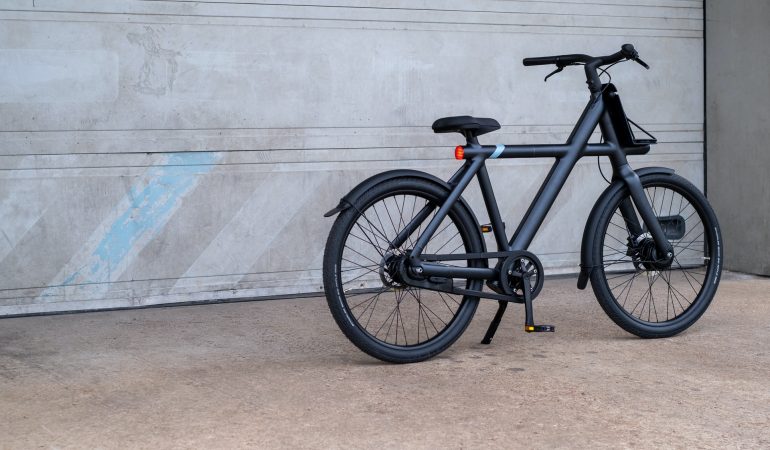
 You’ll also wish to consider your financial plan. However, you need to remember that if you purchase a bicycle or a different vehicle, you need to think about the cost of the automobile itself and the prices for the upkeep and application of this bicycle and its components, particularly the battery. That is why you wish to be certain that you don’t just look at the least expensive electric bicycles, but also in the permanent ones.
 This is the first step you will include as it usually means you have selected the essential and necessary part of your bicycle: the motor. You need to be sure of the type of person you’re. Would you rather have a very super-powerful bike that meets your rate requirements, or can you compare two bicycles completely in-line? This defines a whole lot of what you believe is ideal by itself. At any time you reach a motorbike into the highest engine power, you’re as comfortable as possible. So anything under 400cc consistently is reasonable. It is superb.